9 Steps to Write Engaging Cold Call Scripts With Templates in 2026
Learn how to write cold call scripts that actually convert in 2026. Follow these 9 proven steps with ready-to-use templates to engage prospects and close more deals.
Cold calling is one of the oldest and most resilient sales techniques in the book. In 2026, it remains a powerful first touchpoint for businesses across virtually every industry — but only when done right. The truth is, an unplanned cold call rarely goes anywhere. What separates a call that books a meeting from one that ends in a hang-up is a well-crafted, thoughtful cold call script.
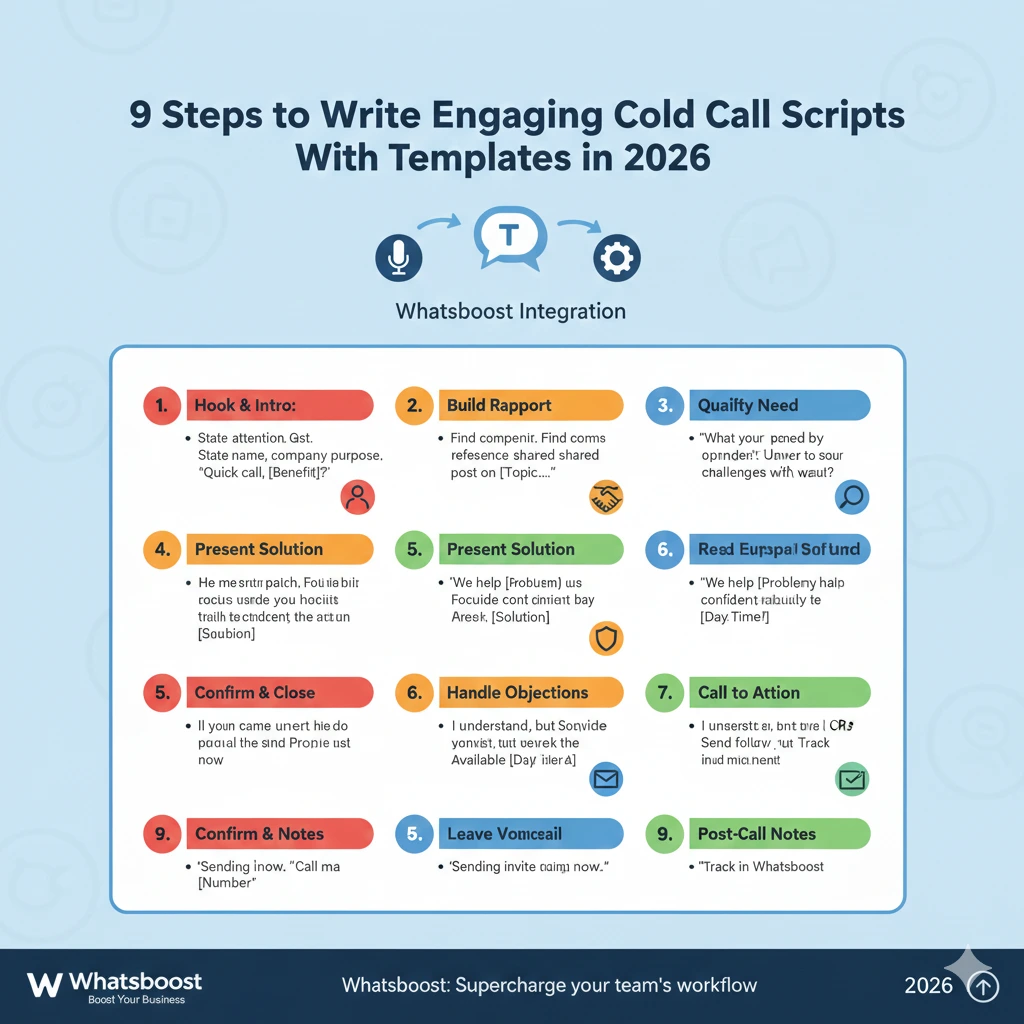
To help you write a script that actually works, here are 9 essential steps — complete with templates you can customise and use right away.
Step 1: Do Your Preparation
Before you write a single word of your script, answer these three foundational questions:
- Who is your target audience for this cold call?
- What industry are they in?
- What is the primary goal of the call?
Your goal might be to schedule a follow-up call, book a video meeting, or arrange an in-person appointment. Each goal requires a different approach, which is why preparation is not optional — it shapes every part of your script.
Step 2: Study Your List
Whether you built your prospect list yourself or received it from a manager, take time to research each person before picking up the phone. Use LinkedIn or any available resource to find out:
- Their full name and correct pronunciation
- Their company and industry
- Their current role and responsibilities
- Any specific detail that makes them unique
The more you know about a prospect, the more naturally the conversation flows — and the more comfortable they feel speaking with you. This preparation alone can dramatically improve your call outcomes.
Step 3: Watch Your Tone
Here is one of the most common mistakes salespeople make — sounding like a salesperson. In 2026, prospects are more guarded than ever. The moment they sense a scripted pitch, they tune out.
The fix is simple: adjust your tone to sound human, warm, and conversational.
Avoid this: "Hello, there! My name is Elisabeth from DataSecurity. I'd like to inquire about your current data security system and offer you a chance to improve it immensely, so would you consider giving me a minute of your time?"
Try this instead: "Hello [prospect's name]! I'm Elisabeth from DataSecurity. Hope you're doing well. I'd love to hear a bit about your current setup — because we may have something that could genuinely help. Would you mind sharing?"
The second version is friendlier, more relaxed, and far more likely to get a positive response. Keep this tone consistent throughout your entire script.
Step 4: Introduce Yourself Clearly
This is non-negotiable. Never skip your introduction. Prospects will not engage with someone they cannot identify.
Template: "Hello [prospect's name], I'm [your name] and I work for [your company]. We specialise in [brief description relevant to the prospect's industry]."
A clear introduction immediately establishes credibility and signals that this call was made with a purpose — not just dialled at random. That alone encourages the prospect to keep listening.
Step 5: Open With a Simple Question
Your first goal is not to pitch. It is simply to keep the conversation going. Ask a question that is easy to answer and does not require a major commitment.
Examples:
- "Would you be open to hearing how other businesses in your industry are handling this?"
- "What tools are you currently using to manage [specific challenge]?"
- "Do you feel there is room to improve in this area?"
A simple question invites the prospect into the conversation and makes them an active participant rather than a passive listener.
Step 6: Ask Open-Ended Questions
Once the prospect is engaged, go deeper. Open-ended questions encourage them to talk about their current situation, challenges, and goals — all valuable information for your pitch.
Examples:
- "Where do you see your team heading over the next two to three years?"
- "What are your biggest challenges this quarter?"
- "What would the ideal outcome look like for you in this area?"
Listen carefully to their answers. The more they share, the better you can tailor the rest of the call to what actually matters to them.
Step 7: Be Straightforward About Why You Are Calling
After building some rapport, state your purpose clearly and confidently. Being direct shows respect for their time and builds trust — it signals you are not there to waste anyone's time.
Template: "The reason I'm reaching out is that we recently helped [a similar company] save $112,000 a year in data security costs. I wanted to see if a similar approach could work for your business."
This kind of straightforward statement does three things at once — it establishes credibility, demonstrates real results, and gives the prospect a clear reason to keep listening.
Step 8: Suggest Scheduling a Meeting
Your cold call should always end with a clear next step. Do not leave the conversation open-ended. Suggest a follow-up meeting and briefly explain what it will involve.
Template: "I'd love to set up a quick 20-minute call where I can walk you through exactly how this works and see if it is a good fit for your team. Would [day] or [day] work for you?"
Offering two specific options makes it easy for the prospect to say yes without feeling pressured.
Step 9: Be Prepared for Rejection — and Have a Response Ready
Even the best cold call scripts will face rejection. Expect it, and do not let it end the conversation prematurely. When you hear "not interested" or "not right now," use one of these recovery questions to salvage something valuable from the call.
Templates:
- "Completely understand — is there a better time for me to follow up with you?"
- "No problem at all — is there someone else on your team who might find this relevant?"
- "That makes sense — is there a different challenge your team is currently facing that we might be able to help with?"
Even a partial win — a future callback time, a referral to a colleague, or a new piece of information — makes the call worthwhile.
Bonus Step: Analyse Your Calls and Improve
The fastest way to improve your cold calling in 2026 is to review your own performance. Use call recording and analytics to listen back to your calls, assess your tone, identify weak points, and track what is working. Encourage your team to share honest feedback with each other. Consistent self-review turns an average script into a continuously improving one.
Take Your Sales Follow-Up Further With Whatsboost
Cold calls are just the beginning of the sales journey. Once you have made initial contact, the follow-up is where deals are actually won. Whatsboost helps your sales team follow up with prospects instantly through WhatsApp — with personalised broadcast messages and automated chatbot flows that keep every lead engaged without adding to your team's manual workload.
In 2026, the businesses closing the most deals are the ones combining smart cold calling with fast, automated WhatsApp follow-ups. Whatsboost makes that easy.
FAQs: Cold Call Scripts
What is a cold call script? A cold call script is a structured guide that helps salespeople navigate a cold call confidently — covering the introduction, key questions, pitch, and closing — while still leaving room for natural conversation.
How long should a cold call script be? Most effective cold calls last between two and five minutes. Your script should be concise enough to cover the essentials without overwhelming the prospect. Focus on opening the conversation and securing a next step, not closing the deal on the first call.
What is the most important part of a cold call script? The introduction and your first question are the most critical. If you fail to establish who you are and engage the prospect within the first 20 seconds, the call is unlikely to go anywhere.
How do I handle rejection on a cold call? Stay calm and use a recovery question to keep the conversation going — ask about a better time to call back, whether someone else might be interested, or whether there is a different problem you could help with.
How can Whatsboost help with cold calling follow-ups? Whatsboost allows your team to send personalised WhatsApp follow-up messages to prospects after a cold call — through broadcast campaigns or automated chatbot flows — ensuring no lead goes cold between touchpoints.
FAQs About Whatsboost Automation
What is Whatsboost? Whatsboost is a WhatsApp marketing and automation platform built on the WhatsApp Business API. It helps businesses send bulk messages, automate follow-ups, and build chatbot flows to engage leads at scale. Learn more at whatsboost.in.
Can Whatsboost automate follow-ups after a cold call? Yes. You can set up automated WhatsApp messages to be sent to prospects immediately after a cold call, keeping the conversation warm and moving forward without manual effort.
Does Whatsboost support WhatsApp chatbots? Yes. Whatsboost's chatbot builder lets you automate responses, qualify leads, and guide prospects through a tailored conversation flow — around the clock.
Can I send bulk WhatsApp messages to my prospect list using Whatsboost? Yes. Whatsboost's broadcast feature lets you send personalised bulk messages to your entire prospect list safely through the WhatsApp Business API — without risking your number being banned.
Is Whatsboost suitable for small sales teams? Absolutely. Whatsboost is built for businesses of all sizes. Its simple interface and flexible plans make it easy for even a small sales team to get started with WhatsApp automation quickly.
Want to automate WhatsApp for your business?
Set up campaigns, replies, and follow-ups in minutes.