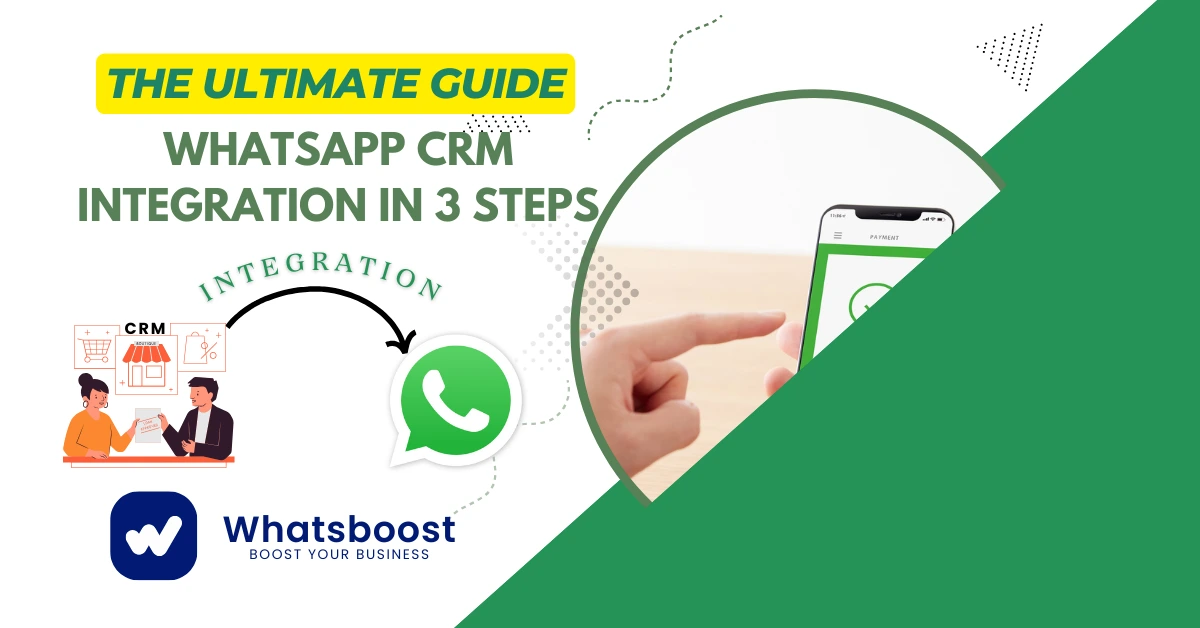
WhatsApp CRM Integration in 3 Steps
Learn how to integrate WhatsApp with your CRM in just 3 steps. Discover how WhatsApp CRM systems work, key features to look for, essential best practices, and how to use WhatsApp automation to manage leads, improve sales, and enhance customer communication.
Mastering WhatsApp CRM: Transform Chats into Business Growth for Indian Enterprises
In the heart of India's bustling digital economy, where WhatsApp serves as the lifeblood of everyday communication, the concept of
At its core, a conversational CRM represents more than mere technology; it's a strategic shift.
The Strategic Imperative of WhatsApp CRM in India
Why does integrated messaging resonate so strongly with the Indian ecosystem? The answer lies in the app's unparalleled penetration across urban centers like Mumbai and rural outposts alike. Unlike email or social feeds hampered by algorithms, WhatsApp delivers direct, trusted access. When integrated via an official business solution, it empowers sales teams to re-engage dormant leads with personalized catalogs or broadcasters, while support agents handle queries with context from prior chats pulled from a central database.
Consider the operational transformation: A service provider in Gujarat might use automated workflows to qualify leads, asking tailored questions based on historical data before routing high-value conversations to senior reps. This not only accelerates conversions but fosters trust, as customers interact on their preferred platform. In India, where mobile-first habits dominate, such integrations bridge the gap between casual messaging and professional workflows, ensuring no opportunity slips through the cracks.
Moreover, modern customer journeys are often fragmented. Businesses frequently juggle multiple tools—email in one software, chats in another. By syncing messaging streams with a CRM, every voice note, call, or media share becomes part of a unified profile, enriched with historical context. This holistic view is invaluable for sectors like e-commerce and real estate, where timely follow-ups can make or break deals.
Navigating Integration Paths for Scalability
Enterprises have two primary avenues to implement this technology. The first involves direct linkage of the business messaging layer to established platforms like Salesforce. Here, native connectors pull data into familiar dashboards, though they may occasionally fall short on messaging-specific nuances like real-time call handling or rich media previews.
The second, often more robust path, involves dedicated messaging platforms that function as a WhatsApp-centric CRM layer. These intermediaries excel in omnichannel support, AI-driven automation, and seamless syncing across multiple systems. For rapidly scaling organizations, this approach provides the flexibility to manage high-volume interactions without data silos, ensuring the chat interface feels like an extension of their core operations.
Discussions around these paths often highlight the trade-offs. Direct integrations prioritize simplicity for small teams, while dedicated messaging platforms unlock advanced features like agent collaboration and compliance tools aligned with
Core Capabilities That Define Effective Messaging Workflows
A true conversational system thrives on features that harmonize a chat-first style with management rigor. Official API access is non-negotiable, enabling multi-agent scalability absent in the basic consumer app. Lead management follows suit, with contact syncing and segmentation drawing from chat profiles to mirror real-world behaviors.
Voice Capabilities: Integrated calls allow for nuanced discussions—from price negotiations to technical troubleshooting—all logged automatically for quality assurance.
Automation Intelligence: Routing rules direct queries based on keywords or sentiment, while AI suggests replies grounded in historical interaction data.
Security Protocols: End-to-end encryption and data protection protocols safeguard sensitive information in transit and at rest.
Analytics close the loop, offering insights into response patterns and engagement trends. For regional enterprises, these elements converge to create a feedback mechanism, refining marketing and support strategies in real-time.
Implementing the System: A Streamlined Journey
The rollout begins with securing an official business account through an authorized provider, bypassing the limitations of personal apps. Connection to your chosen software—be it a major global platform or a custom solution—comes next via APIs or no-code bridges. Finally, activate full syncing: merge contacts, tag interactions, and deploy workflows for automated nurturing.
This process demystifies the technology, making it accessible even for non-technical teams. Early wins, like a unified team inbox, quickly justify the implementation effort.
Best Practices and Pitfalls in Deployment
Success hinges on thoughtful execution. Start by enriching profiles with opt-in details, merging duplicate entries to prevent information silos. Personalize broadcasts using segmented data, maintaining a brand voice that resonates culturally.
Challenges remain: Template approvals demand foresight, while strict opt-in rigor prevents account flagging. International standards like GDPR and local Indian IT rules necessitate robust permission management. Yet, with proactive monitoring, a messaging-integrated CRM becomes a resilient business asset.
Real-World Impact and Future Horizons
From retail cart recoveries to healthcare appointment reminders, these tools power tangible outcomes for the Indian market. As AI evolves, expect deeper personalization; as digital infrastructure matures, so will the depth of these integrations.
In essence, this is not just a tool—it's a mindset. It leverages the world's most popular messaging app to humanize digital relationships in a vibrant, fast-paced market.
Want to automate WhatsApp for your business?
Set up campaigns, replies, and follow-ups in minutes.