Why Businesses Need Smarter Task Follow-Up Systems (2026 Guide to Automation & Productivity)
WhatsApp reminders and automation are helpful for accountability. WhatsBoost helps build these systems customized for your organization as well as WhatsApp internal group automations.
Work is Happening… But Tasks Are Still Getting Missed
Every growing business faces this problem 👇
- Teams are busy
- Messages are constant
- Work is ongoing
But still 👇
❌ Tasks get forgotten
❌ Follow-ups are missed
❌ Deadlines slip
The Reality: Work Doesn’t Fail — Follow-Ups Do
Let’s be honest 👇
Most businesses don’t lose deals because of:
❌ Bad product
❌ Poor service
👉 They lose deals because:
👉 They didn’t follow up on time
Common Scenario
- Lead shows interest
- Team responds once
- No follow-up
- Lead goes cold
👉 If you're still managing tasks manually, first understand how WhatsApp automation without Business API works - because automation is the foundation of follow-up systems.
The Real Problem: No Structured Follow-Up System
Most teams operate like this:
- Tasks live in chats
- Reminders are manual
- Ownership is unclear
👉 Result:
❌ No accountability
❌ No tracking
❌ No consistency
What is a Task Follow-Up System?
Simple definition 👇
👉 A system that ensures:
- Every task is tracked
- Every follow-up is scheduled
- Every action is completed
👉 Automatically
Why Follow-Up Systems Matter More Than Ever
📲 Work Happens on WhatsApp
Most communication happens there
⚡ Speed Decides Outcomes
Fast follow-ups = higher conversions
👥 Teams Are Distributed
Coordination is harder
📊 Accountability is Critical
Without tracking, nothing scales
👉 To understand how teams track work efficiently, explore platforms to track conversations and deal progress
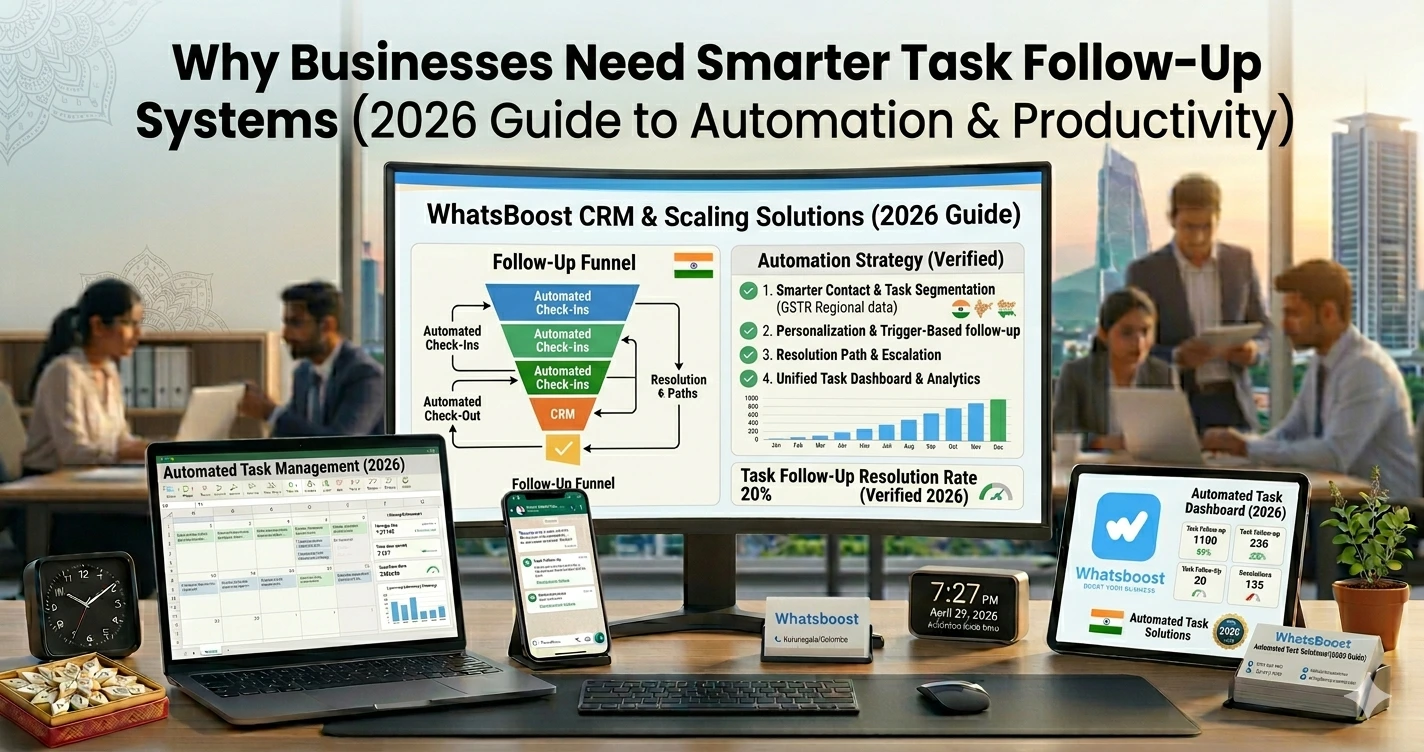
How Smarter Follow-Up Systems Work
High-Level Flow
- Task is created
- Follow-up is scheduled
- Reminder is triggered
- Action is completed
- System updates status
👉 This ensures nothing is missed
Step-by-Step: Build a Smarter Task Follow-Up System
Step 1: Capture Tasks Automatically
Sources:
- WhatsApp messages
- Team chats
- Customer enquiries
👉 You can automate task capture using Google Forms to WhatsApp workflows
Step 2: Convert Messages Into Tasks
Instead of:
❌ Reading messages manually
👉 System should:
✔ Detect task intent
✔ Create task automatically
👉 This is similar to task delegation systems on WhatsApp
Step 3: Assign Task Ownership
Every task must have:
👉 One owner
✔ Clear responsibility
✔ No confusion
Step 4: Schedule Follow-Ups Automatically
This is the core 👇
👉 Every task should have:
- Follow-up time
- Reminder trigger
Example:
Task: Send quotation
Follow-up:
- Day 1 → Reminder
- Day 3 → Follow-up message
👉 This eliminates manual tracking
Step 5: Enable Team Collaboration
For complex tasks:
👉 Use WhatsApp groups
- Discuss
- Share updates
- Coordinate
👉 Learn how structured collaboration works using WhatsApp group automation systems
Step 6: Track Task Status
Every task should be:
- Pending
- In progress
- Completed
👉 Without tracking, follow-ups fail
Step 7: Automate Follow-Up Messages
System can:
✔ Send reminders
✔ Send follow-ups
✔ Notify team
👉 For structured workflows, see WhatsBoost conversion flows from enquiry to invoice
Step 8: Close Tasks Properly
Once done:
✔ Mark completed
✔ Notify stakeholders
✔ Archive
👉 Clean system = scalable system
Real Workflow (Simple Table)
| Step | Action | Result |
| Task created | System captures | Organized work |
| Follow-up set | Scheduled | No delay |
| Reminder triggered | Team notified | Action taken |
| Task completed | Updated | Closure |
Best Use Cases
🏢 Sales Teams
- Lead follow-ups
- Deal closures
👉 See how businesses turn TradeIndia leads into a sales machine
🛒 E-commerce
- Order follow-ups
- Customer queries
🏭 B2B Businesses
- Multi-step processes
- Client coordination
🎓 Agencies & Services
- Deliverables
- Client communication
Advanced Strategies (Expert Level)
🔁 Multi-Step Follow-Up Sequences
Example:
- Day 1 → Reminder
- Day 3 → Follow-up
- Day 7 → Final message
🧠 AI-Based Follow-Ups
AI decides:
- When to follow up
- What to say
👉 Enhance workflows using Gemini AI WhatsApp integration
📊 Performance Tracking
Track:
- Follow-up success rate
- Response time
- Conversion rate
🔗 CRM Integration
Full visibility
👉 Learn more about CRM + WhatsApp automation integration
Before vs After Follow-Up Systems
| Factor | Without System | With System |
| Task tracking | ❌ Poor | ✔ Clear |
| Follow-ups | ❌ Missed | ✔ Automated |
| Accountability | ❌ Low | ✔ High |
| Productivity | ❌ Low | ✔ High |
👉 Follow-up systems change everything
Common Mistakes to Avoid
❌ Relying on memory
❌ No reminders
❌ No ownership
❌ No tracking
❌ Delayed follow-ups
👉 These reduce productivity
Pro Tips (From Real Teams)
Follow-Up Fast
Speed matters
Automate Repetitive Tasks
Save time
Keep System Simple
Avoid complexity
Track Everything
Data = improvement
Why WhatsBoost is Ideal for Follow-Up Systems
🚀 Automation Engine
Trigger → Task → Follow-up
🤖 Smart Workflows
No-code system
👥 Team Coordination
Clear ownership
📊 Analytics
Track performance
👉 It transforms WhatsApp into a follow-up engine
Real Insight
Most businesses think:
👉 “We need more leads”
But reality:
👉 “We need better follow-ups”
✔ Better follow-ups = higher conversions
Scaling Strategy
Start with One Workflow
Test it
Add More Follow-Ups
Expand
Optimize Continuously
Improve
👉 Scaling requires systems
Final Conclusion
Work doesn’t fail
👉 Follow-ups do
Without system:
❌ Missed tasks
❌ Lost opportunities
With smarter follow-up systems:
✔ Tasks are completed
✔ Teams are accountable
✔ Conversions increase
👉 The future is:
👉 Automation + Follow-Ups = Business Growth 🚀
Want to automate WhatsApp for your business?
Set up campaigns, replies, and follow-ups in minutes.